Alerts & incidents

The right person hears first, and the next one hears if they don't.

An incident opens itself, reaches the person on call, and moves up the chain you set if no one answers — with each step on record.

Used in:Cold chain, store to door · Fleets and deliveries · Equipment and machines · Industrial control · Crew safety · Find it indoors

Readings on this page are sample data.

Alarms nobody needs to hear

The settingSuppression windows, and quiet hours for routine alerts

A reading has to stay out for the time you set before anything opens, repeats join the open incident instead of starting new ones, and quiet hours hold the routine alerts. When a phone rings at night, it's worth answering.

OnOneIoT Edge

Used in:Cold chain, store to door

Set the conditions: Rules & workflows →

The 3 a.m. alarm that nobody picks up

On-call schedules by time zone and an escalation chain: the person on call can acknowledge from the text itself, and if no one does, the next person on the chain hears.

Used in:Cold chain, store to door

An engineer with a tablet beside a pump on a plant floor.
9:52 PM · SMS to Ravi (on call)Delivered+10 min maintenance lead
  • 9:52 PM · SMS to Ravi (on call)Delivered
  • +10 min maintenance lead

Did the text actually arrive?

SMS, WhatsApp, email, mobile push and Microsoft Teams. SMS, email, push and Teams each come back with a delivery receipt, and a send that fails is retried on its own. Slack, ServiceNow and your own tools by webhook.

Used in:Cold chain, store to door · Crew safety

Incident #4860 · sent4:40 AM
TimeChannelToStatus
SMSRavi (on call)Delivered
PushRaviDelivered
EmailMaintenance team1 retry
TeamsArlington plantPosted
WebhookServiceNowAccepted

A worker presses SOS

The settingThe escalation policy an SOS follows

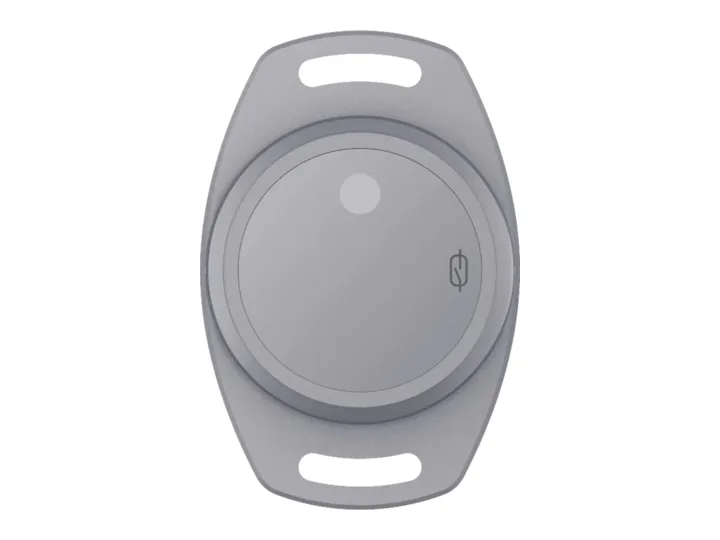
Each kind of incident follows its own policy: who hears first, how long they have to acknowledge, and who hears next. An SOS from a Halo tag reaches the site lead at once, by push and SMS, with the zone the worker was last in.

OnHalo+Link

Used in:Crew safety · Cold chain, store to door

Who is on site: Monitoring & tracking →

Monthly checks that slip between shifts

Recurring maintenance incidents with a checklist in order, on the same list as the alarms — a step can't be ticked before the one above it. Already run a maintenance system? Incidents reach it by webhook.

Used in:Industrial control · Crew safety

Monthly · Compressor 2Due Fri
  1. 1 · Isolate power (done)Done · Mon
  2. 2 · Clean condenser coil (done)Done · Mon
  3. 3 · Check door sealsDue Fri
  4. 4 · Log suction pressureAfter step 3
  • Next oneOpens itself · Nov 20

The auditor asks what happened, and who did what

The settingThe incident log, sent as a scheduled report

Every incident keeps its messages and delivery receipts, comments, attachments, checklist and who acknowledged it, in the order it happened. Filter the log by site, category and period, and the log is sent to the auditor as a scheduled report.

Used in:Cold chain, store to door · Industrial control

Where it runs

Running today.

  • 10,000+devices

    Vanix

    Out-of-zone alerts on its customers' assets, on 10,000+ devices.

  • 6processes on one line

    Elogictech Edge at Gloster Cables

    A process issue stops the line and alerts the shift on the line's HMI.

Questions

Before you ask.

Something we haven't answered? Ask it on the call, or write to [email protected]

Also in OneIoT:Monitoring & tracking · Fleet & routes · Rules & workflows · Edge control · Dashboards & twins

Does it replace a maintenance system?

It runs maintenance as scheduled incidents with checklists. If you use a maintenance system, incidents can reach it by webhook.

Can we use Slack?

Yes, by webhook, alongside SMS, WhatsApp, email, push and Teams.

Can we stop alarms during deliveries?

Yes. A reading has to stay out for the hold time you set before it alerts, so a door opened for a delivery doesn't.

What if nobody answers?

The next person on the chain hears, then the next; the record shows who was tried and when.

Can they acknowledge from the text?

Yes. The SMS and push carry a link that acknowledges without signing in.

Does SOS on a Halo open an incident?

Yes — it opens one and reaches the site lead, with the worker's last zone.

Where to start

Start with one site, and the devices it needs.

  1. Call

    A thirty-minute callYour sites or fleet, what goes wrong today, and who answers.
  2. Outline

    A written outline and a fixed priceWhat we connect, what you already have that stays, the first-site fee.
  3. 4 weeks

    Four weeks on your first siteWe connect it, set it up and run it.
  4. Results

    Your results, on recordWhat it recorded, what it caught, and how fast each one was answered.

Start with one site: 4 weeks at a fixed fee. Then a monthly price per site or per tracked device, on a 12-month term.

Prove it on one site in 4 weeks

Sent straight to our team. We use your details only to reply. Privacy policy

Making equipment? Start with one product line, under your brand. Tell us what you make

Prove it on one site in 4 weeks

Tell us about your sites. We reply to set up a thirty-minute call, then send a written outline with a fixed price.

  1. A thirty-minute callYour sites or fleet, what goes wrong today, and who answers.
  2. A written outline and a fixed priceWhat we connect, what you already have that stays, the first-site fee.
  3. Four weeks on your first siteWe connect it, set it up and run it.
  4. Your results, on recordWhat it recorded, what it caught, and how fast each one was answered.
Prefer to talk now?
Sent straight to our team. We use your details only to reply. Privacy policy

Book the scoping call.

Thirty minutes with a sales engineer, on what you run and what you need to see.

The product, the hardware you have already chosen, and what your customer pays for.

No slide deck, no obligation.

Or email [email protected] directly.